Patterns · Early access
The intelligent wildlife
operating system.
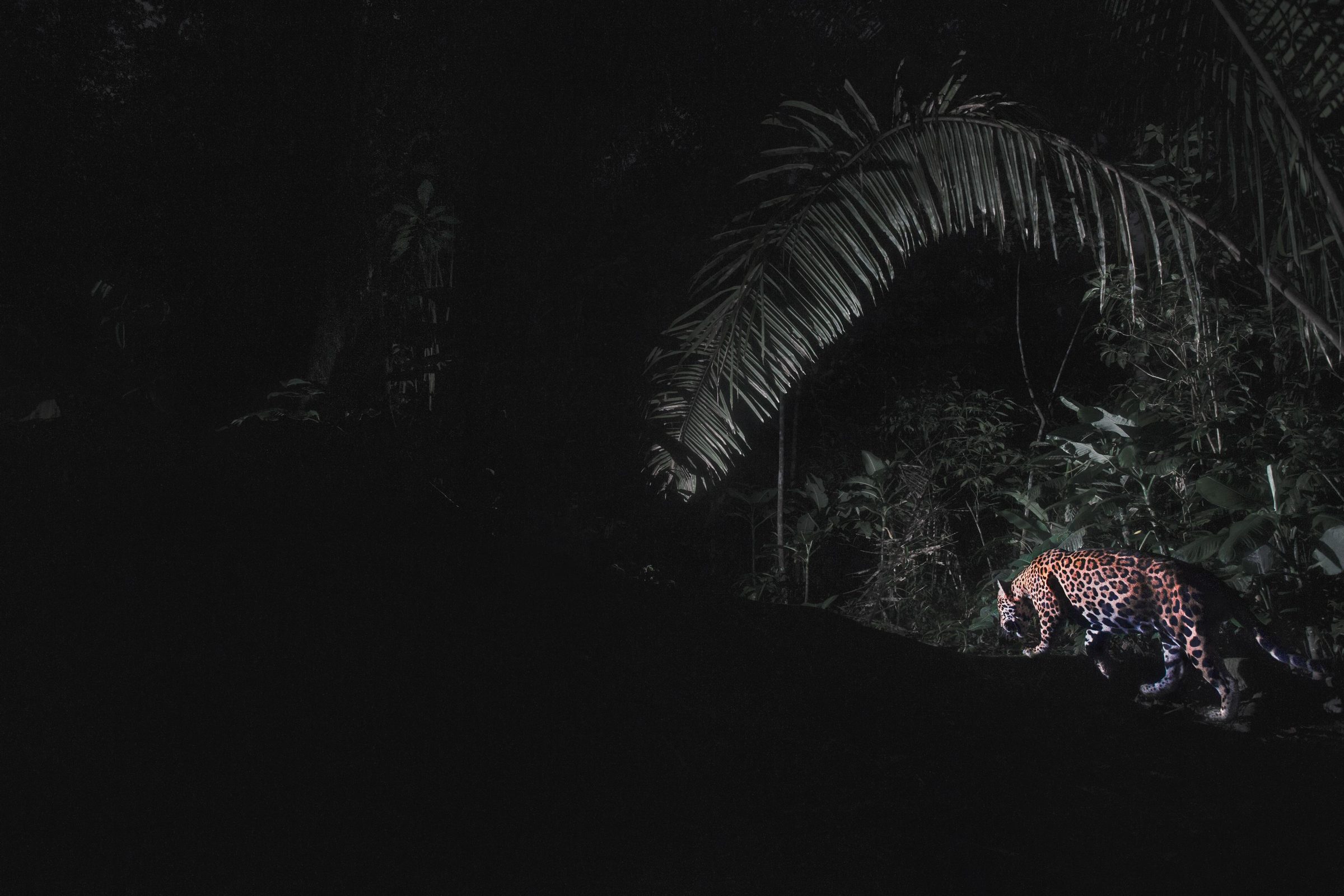
Patterns finds the animals, people and vehicles in your camera-trap photos and video, names the species, and recognizes individual jaguars by their coat. A scientist signs off on every identity.
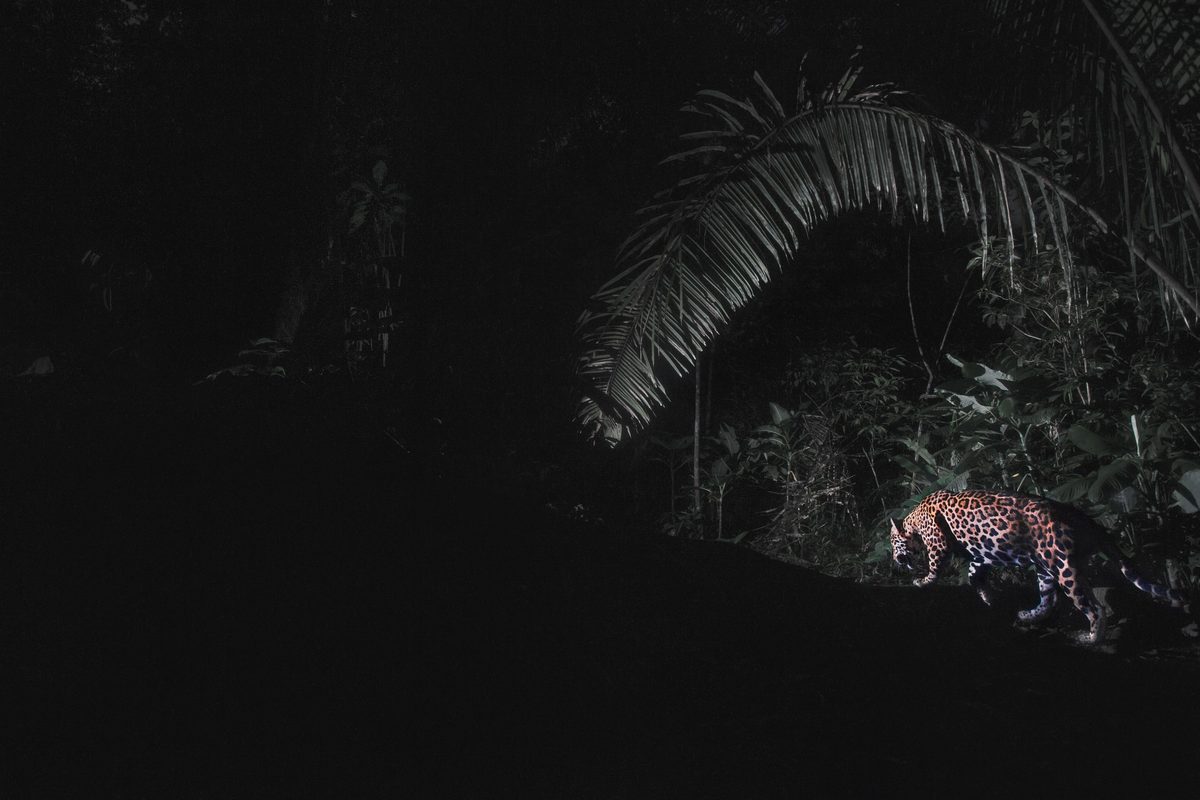
Every animal that walks past, not only jaguars.
How it works
What happens after you upload.
You upload a memory card. Patterns sorts it and names what it can, and a person confirms every jaguar match.
- 01
Upload
Drop in camera-trap folders on the web, or queue uploads offline in the field app. Dates, cameras and locations are read from the files.
- 02
Detect
Every photo and video is checked for animals, people and vehicles. Empty frames are set aside, and photos with people go to a private security review.
- 03
Name the species
Each animal is named from species known in Costa Rica. If the model isn't sure, the photo goes to a review queue.
- 04
OncaID match
OncaID compares the coat with every confirmed jaguar, using the same flank when it can, and checks that the rosettes line up. It shows you the marks that matched. It never names a new animal.
- 05
Human review
Reviewers confirm or reject each match in the Needs ID queue. A second, independent reviewer makes a record research grade.
- 06
Map and export
See sightings on maps with protected areas, follow trends across years, and export Camtrap DP 1.0 or a full research package.
Individual recognition is jaguar-only today. Ocelot, margay, puma and Baird's tapir are planned. Read the methods ›
Animals, people and vehicles found in every frame
Species named against a Costa Rica list
Jaguars matched by coat
Research grade only after two reviewers
The hard part is going through the photos.
One camera fills a memory card with empty frames, wind and people, and maybe a few seconds of the animal you wanted. Most programs have years of photos in folders, sorted by whoever had time. Which jaguar is which often lives in one person's head.
What's different
It tells you which jaguar.
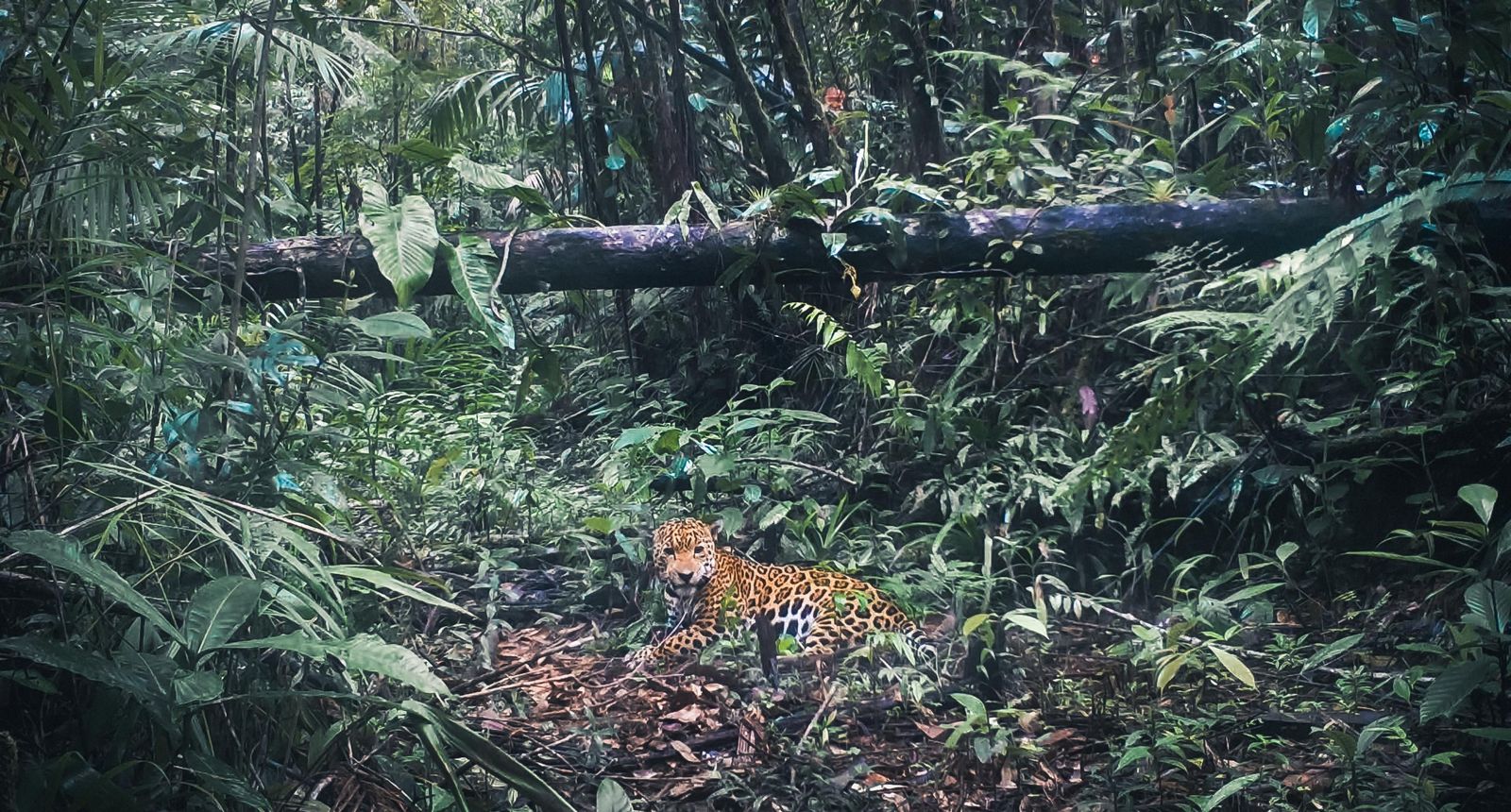
Most tools stop at "this photo contains a jaguar." Patterns matches it to a known jaguar, records who confirmed the match, and exports a record you can publish.
| Manual review | Generic species classifier | Patterns | |
|---|---|---|---|
| Empty frames, people, vehicles | Someone clicks through every frame | Flags blanks | Every photo is checked for animals, people and vehicles. Empty frames are set aside. People go to a restricted Security review, hidden from non-admins. |
| Species | By eye, by whoever has time | A label, often with no local context | Named by a camera-trap species classifier against species known from Costa Rica. Unsure calls go to a review queue with the top five answers. |
| Individual animals | Side-by-side photo comparison | Not offered | OncaID ranks candidate jaguars by coat, checks that the rosettes line up on the same flank, and shows the matched marks. |
| Who decides | One person's memory | The model's output | Reviewers make every identity call. Research grade needs two independent reviewers. Nothing is named or merged automatically. |
- Empty frames, people, vehicles
- Every photo is checked for animals, people and vehicles. Empty frames are set aside. People go to a restricted Security review, hidden from non-admins.
- Species
- Named by a camera-trap species classifier against species known from Costa Rica. Unsure calls go to a review queue with the top five answers.
- Individual animals
- OncaID ranks candidate jaguars by coat, checks that the rosettes line up on the same flank, and shows the matched marks.
- Who decides
- Reviewers make every identity call. Research grade needs two independent reviewers. Nothing is named or merged automatically.
Compared with manual review and generic classifiers on desktop.
See how it works ›Built and working
What's already built.
Species and individual ID
Species named across the camera-trap record; jaguars recognized by coat.
Satellite and protected-area maps
Stations and sightings on satellite imagery with protected areas and corridors.
Security review
Photos with people or vehicles go to a restricted queue, hidden from everyone else.
Field app with offline maps
Upload from the trail and carry your study area offline.
iPhone and Android · Coming soonBeyond jaguars
Other species on your cameras.
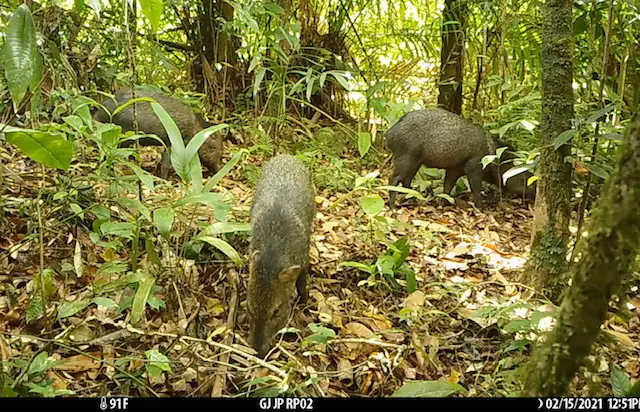
Patterns also names tapirs, peccaries, curassows, macaws and the other animals that show up on Costa Rican traps. Jaguars are the first species with individual recognition. Ocelot, margay, puma and Baird's tapir are next.
- Wild cats: Jaguar, Puma, Ocelot, Margay, Oncilla, Jaguarundi
- Hoofed: Baird's Tapir, White-Lipped Peccary, Collared Peccary, White-Tailed Deer, Red Brocket
- Forest floor: Paca, Agouti, Coati, Tayra, Northern Tamandua, Kinkajou
- Canopy: Capuchin, Howler Monkey, Spider Monkey, Two-Toed Sloth
- Birds: Great Curassow, Crested Guan, Great Tinamou, Scarlet Macaw, Great Green Macaw, Keel-Billed Toucan
What the data looks like
See your cameras as data.
Every confirmed photo becomes a record you can count, chart and compare across seasons.
Detections by month
Activity by hour
Individual animals across cameras
Species mix
A person confirms every jaguar.
The model ranks likely matches. One reviewer confirms the match, and a second, independent reviewer makes it research grade. The model never overrules a person's call. A new jaguar keeps its ID code until a verified researcher names it.
How review works ›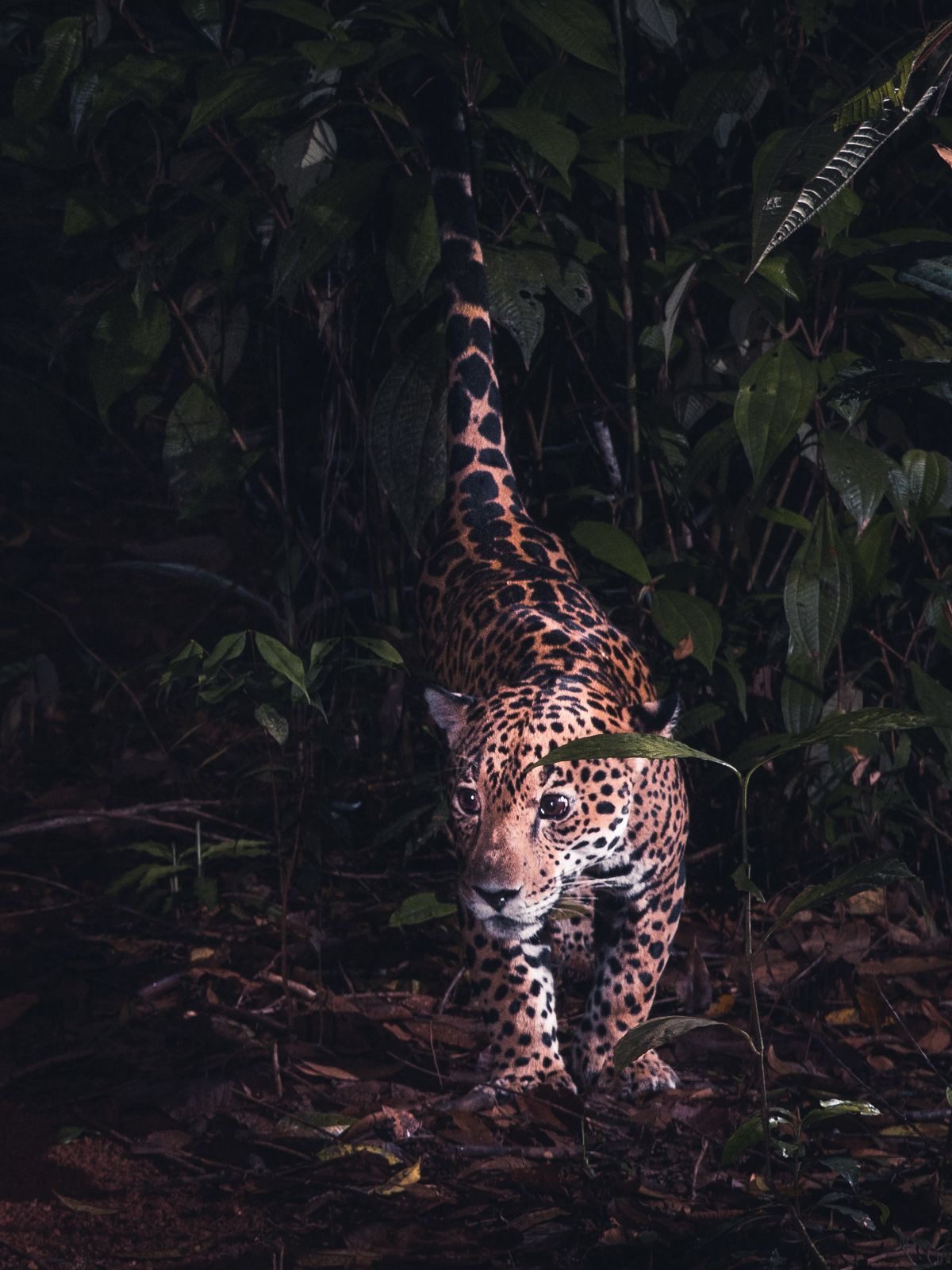
Status
Still in development.
Patterns is a project by Grow Jungles, a U.S. 501(c)(3) founded in 2019, in partnership with Las Oncas, led by Miguel Guevara. Access is invite-only while we work with a first cohort of field programs in Costa Rica.


What's new
- Oct 17, 2026Camtrap DP export now carries reviewer names, bounding boxes, sex and life stage, and clear data and media usage terms; images stay out of the package.
- Oct 16, 2026AI assistants can connect to Patterns as a read-only connector, signed in as you.
- Oct 15, 2026Field app: push notifications for alerts, and Face ID before exact locations, Security evidence or exports open.
Get the field app.
Patterns for iPhone and Android: upload from the trail, work the review queue, and carry offline maps of your study area. It is in private testing now. Request early access and we'll send an invite when your program is set up.
iPhone and Android · Coming soon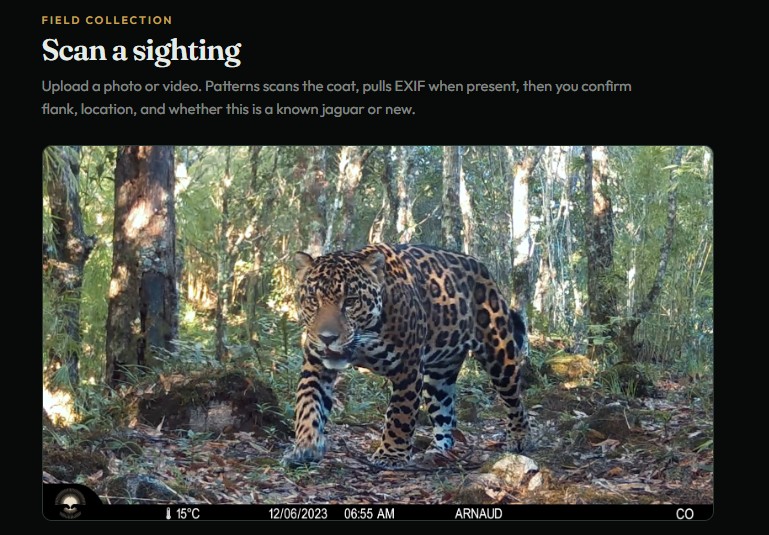
INSIDE PATTERNS
The work behind every jaguar ID.
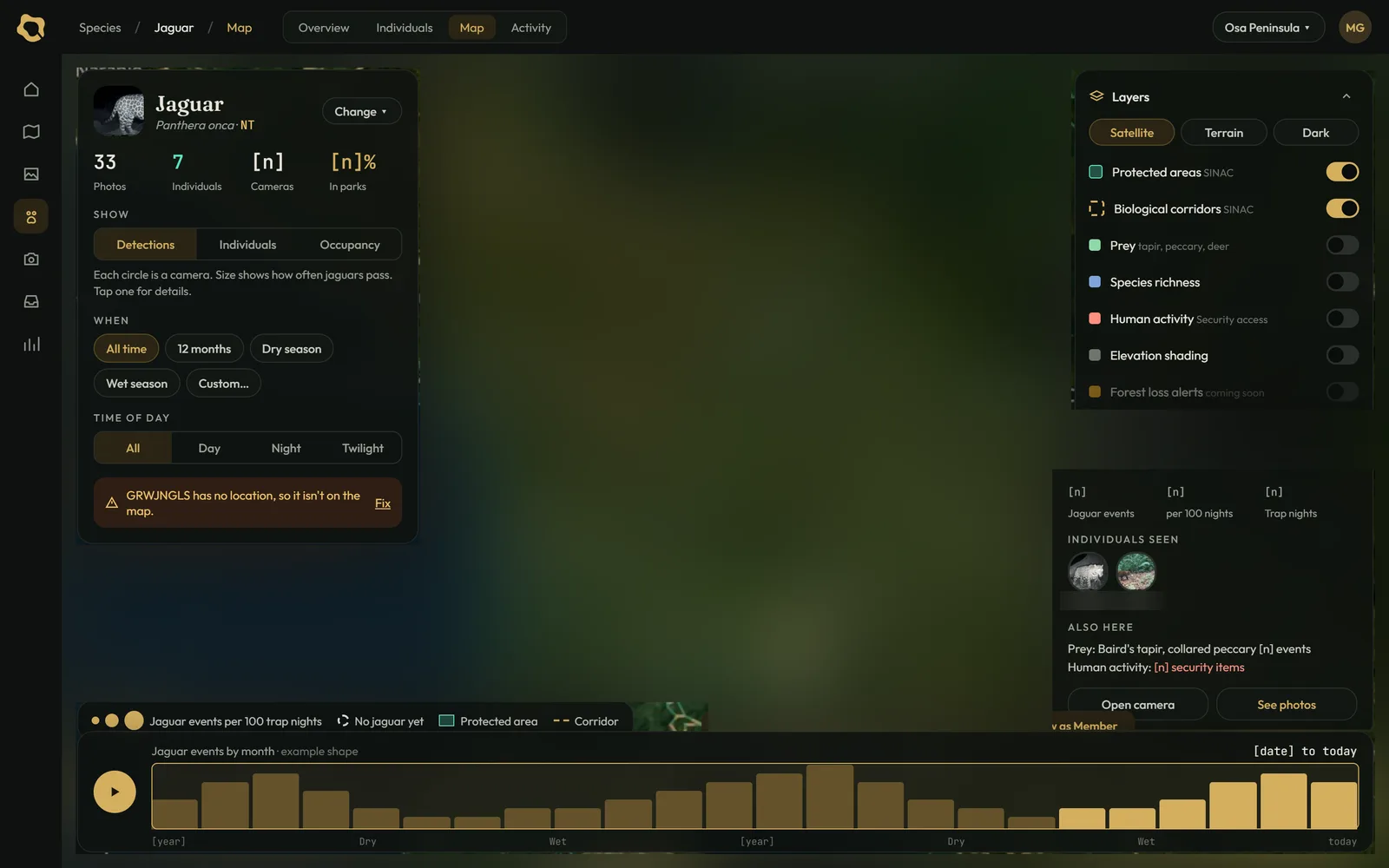
See every jaguar
Where each cat shows up, by season and time of day, with prey and protected areas on the same map.
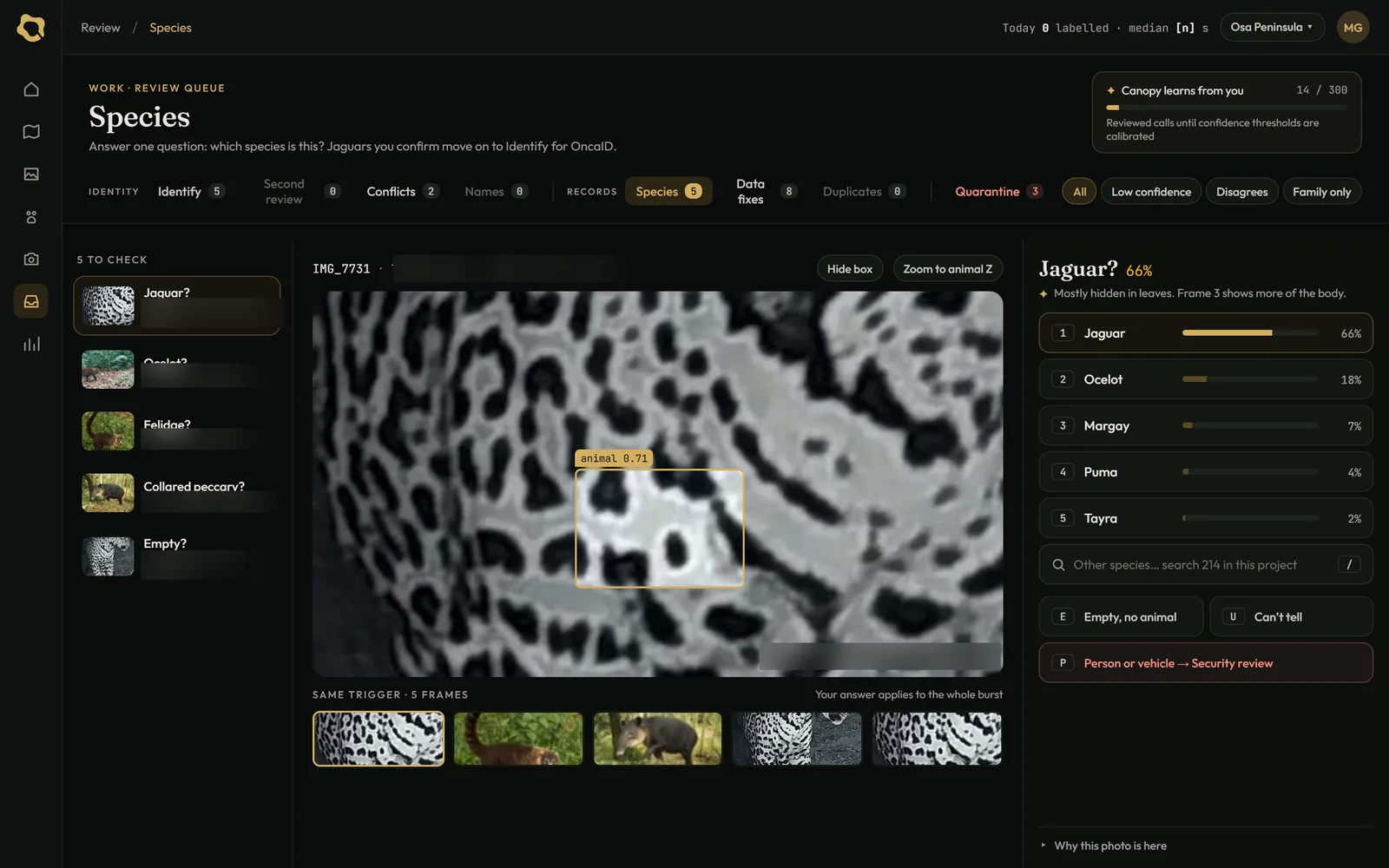
One question per photo
Which species is this? Patterns suggests, a person decides.
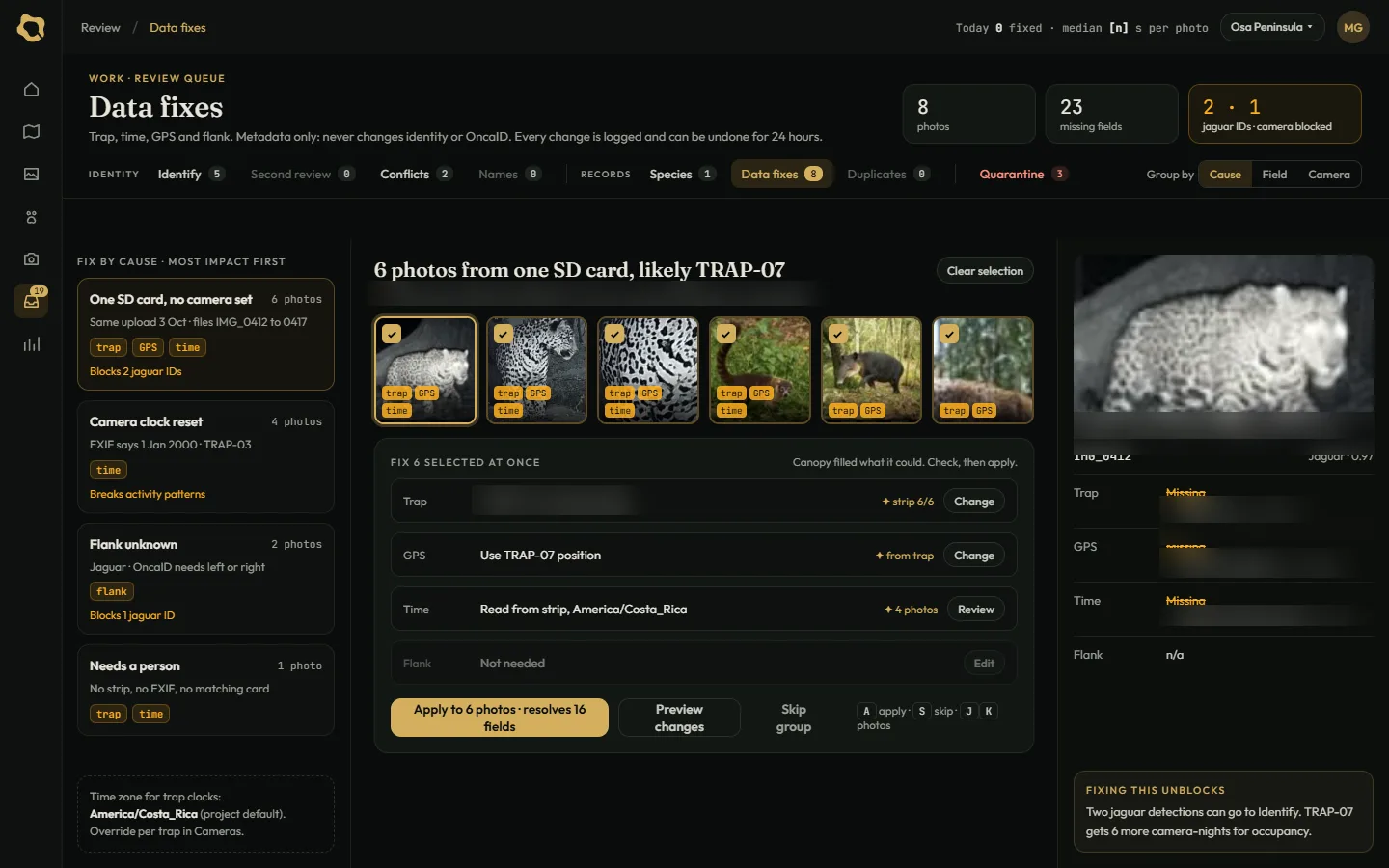
Fix the data, not the science
Missing trap, time or GPS gets filled from the photo strip. Every change is logged and can be undone.
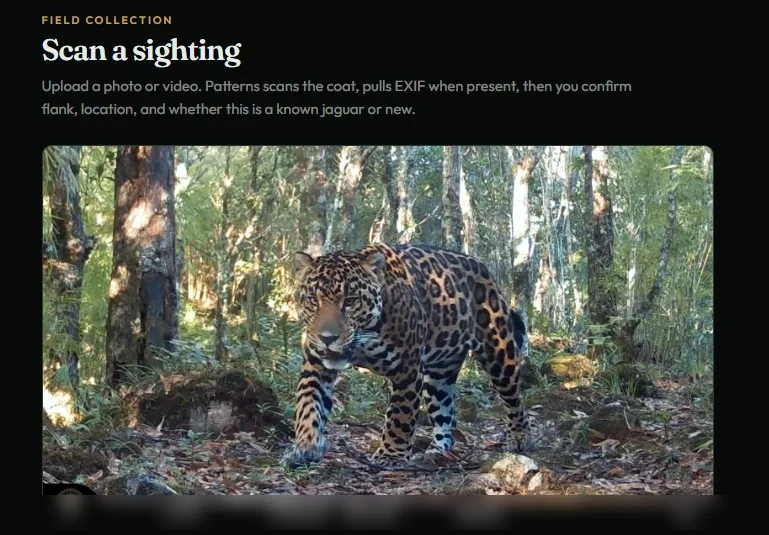
Scan a sighting
Upload a photo or video and confirm the flank.
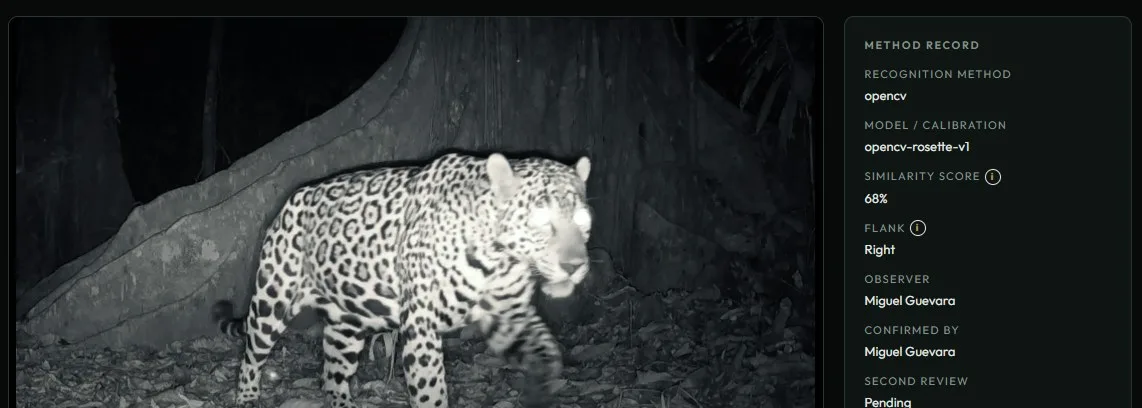
A record for every match
Method, score and who confirmed it.
Have a camera-trap archive?
Tell us about your stations and the species you monitor. A person reads every request and writes back.