How it works
What Patterns does with a photo.
Every step leaves a record a reviewer can check.
What's already built.
Web features are live in the app today. Field-app features arrive with the iPhone and Android release.
Satellite and protected-area maps
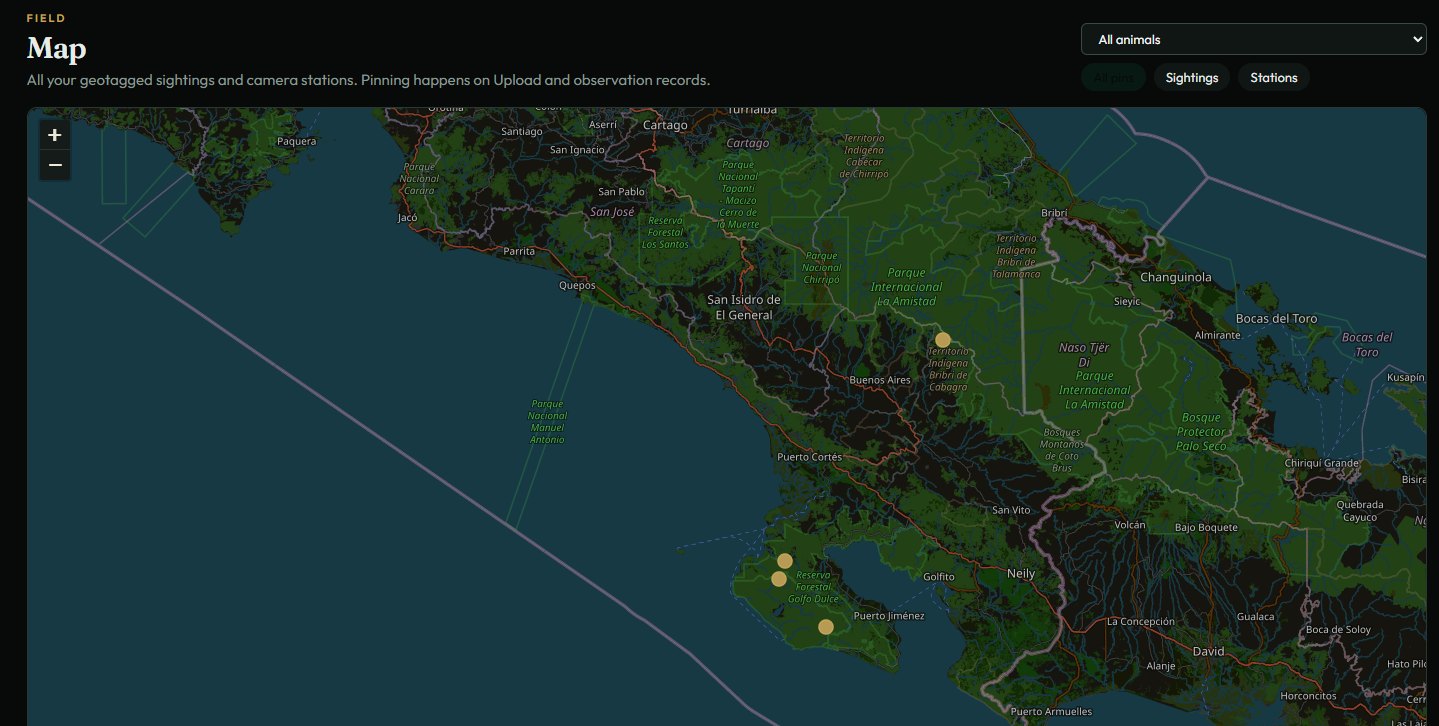
Field and species maps with satellite imagery, protected areas worldwide, Costa Rica's SINAC biological corridors, forest cover, rivers and roads.
Activity insights
Time-of-day activity, weekly rhythm, trends, capture heatmaps and species charts across multi-year camera-trap archives.
Security review
Photos with people or vehicles go to a restricted Security queue with cases, reports and a custody log, hidden from everyone without Security access.
AI assistant access (read-only)
Ask questions of your catalog from a supported AI assistant. Read-only, signed in as you, and limited to what you can already open. Scientist and admin accounts.
Read-only data API
The same read-only tools (individuals, species, detections, stations, map) for standards-based AI clients, at app.wildpatterns.co/api/mcp. Sign-in required.
Offline maps
Download the study area's map before you go: basemap, parks and corridors. Uploads queue without signal and sync when you're back.
iPhone and Android · Coming soonFace ID for exact locations
Exact camera and sighting locations open only after Face ID, and only for roles allowed to see them. Everyone else sees generalized pins.
iPhone and Android · Coming soonPush notifications
Alerts for a followed jaguar seen again, a camera that needs attention, or reviews waiting, sent to your phone. You choose instant or digest.
iPhone and Android · Coming soon01
Field
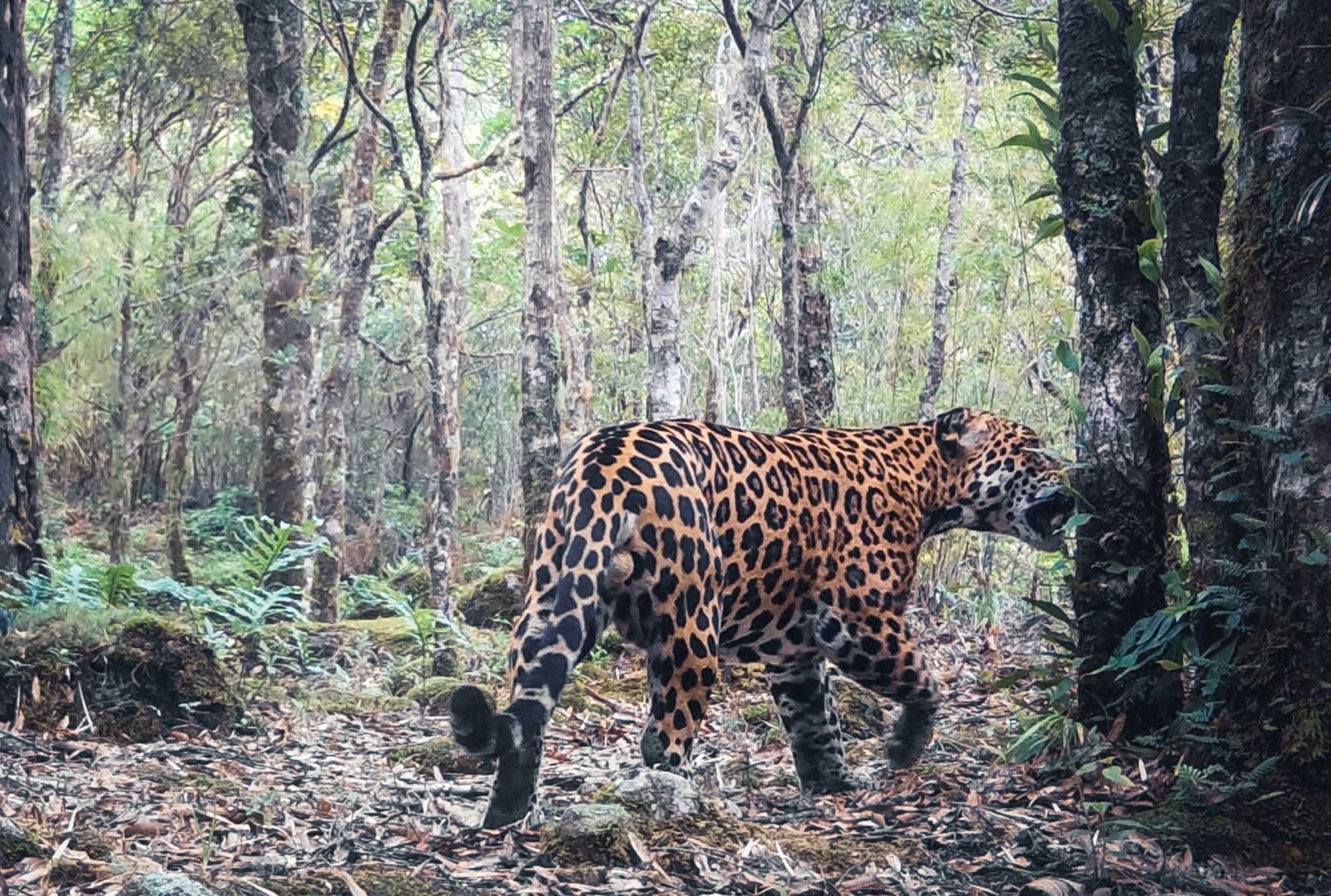
Upload photos and video on the web or from the phone app. The app queues uploads when there's no signal, keeps offline map packs for the study area, reads the camera's photo strip (camera, time, temperature), and works in English and Spanish.
Field app for iPhone and Android is in testing.
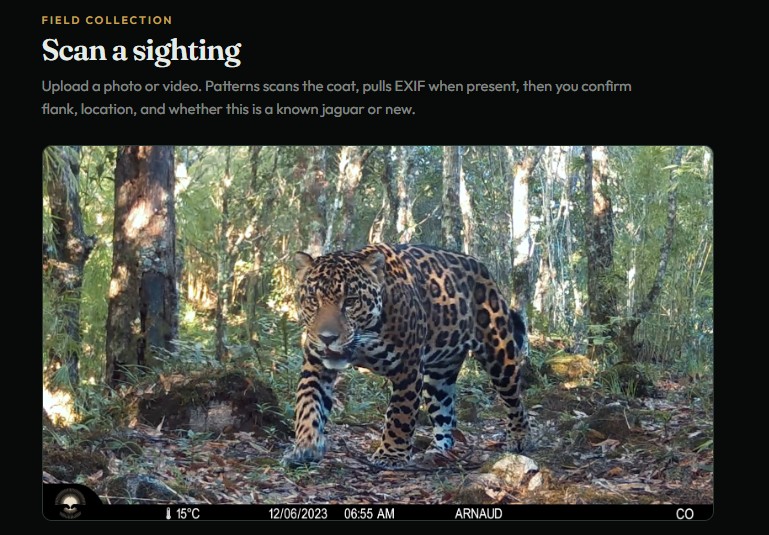
02
Detect
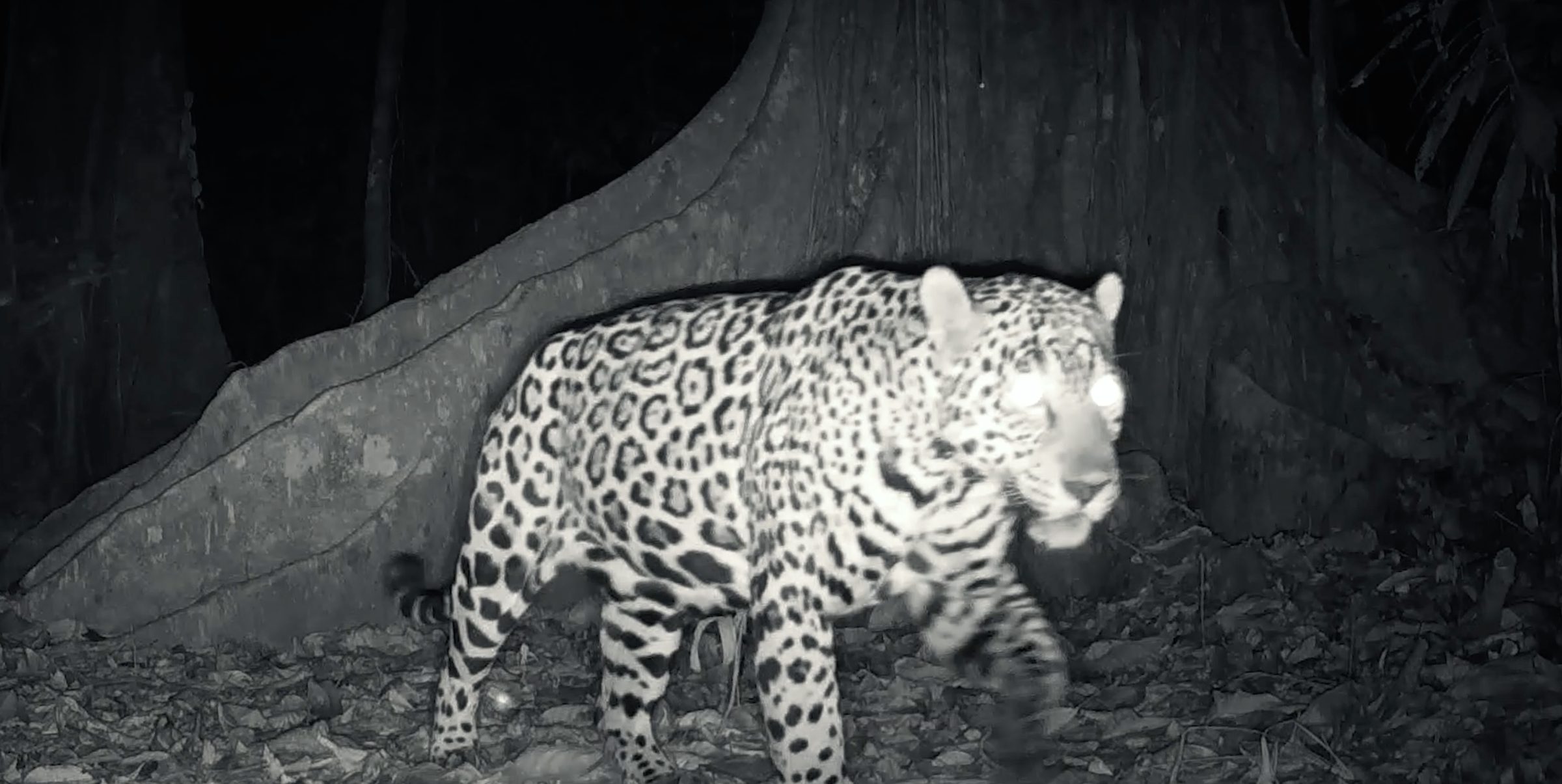
Animal, person and vehicle detection runs on every photo. Empty frames are counted and set aside. For video, Patterns picks the stills where the animal is actually visible.
03
Name the species
A camera-trap species classifier names the animal, limited to species known from Costa Rica. High-confidence calls are applied. Everything else goes to the Species review queue with its top five answers, and a whole burst can be labeled at once.
04
Recognize the individual
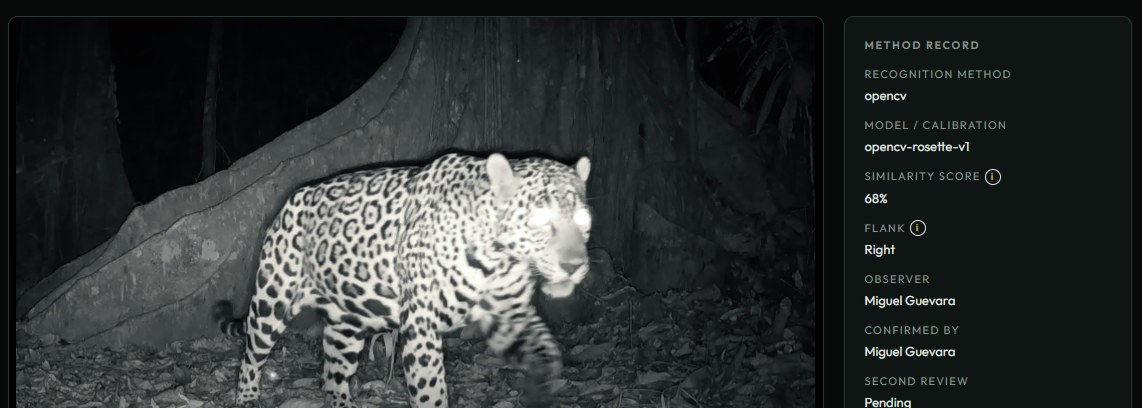
For jaguars, OncaID compares the coat with every confirmed jaguar your program can see, preferring the same flank. It re-ranks the top candidates by matching rosette points and keeping only the ones that agree geometrically. A strong, clear match links the sighting to the existing jaguar. Near-ties wait for a reviewer. Profiles show the matched marks side by side.
05
Review
Four queues: identify, second review, data fixes (camera, time, place) and Security. Photos with people or vehicles go to Security, which only authorized roles can open.
06
Catalog and map
One profile per individual, with sightings, stations, first and last seen, photos and video. The map shows stations, protected areas worldwide and Costa Rica's SINAC biological corridors, plus movement and coverage for an individual.
07
Export
- Capture-history matrix (individual × month).
- Camtrap DP 1.0 package (metadata only; images stay with you).
- Full research ZIP: sightings, stations, deployments, visits, detector boxes, reviews.
- Landscape context on every located sighting: protected area and distance to it, SINAC corridor, ESA WorldCover land cover, slope and aspect.
- Versioned exports you can cite.
08
Ask your catalog
Scientist and admin accounts can connect Patterns to a supported AI assistant as a read-only connector. The assistant sees only what that person can already open, with the same coarse coordinates.
Have a camera-trap archive?
Tell us about your stations and the species you monitor. A person reads every request and writes back.